
What to see at Piazza del Plebiscito
Six stops that tell the story of the Kingdom of Naples, from the neoclassical colonnade to Europe's oldest opera house.


Basilica of San Francesco di Paola
Commissioned by Ferdinand I of Bourbon to celebrate the restoration of the kingdom after 1815, it openly draws on Rome's Pantheon and St Peter's colonnade. The semicircular colonnade wraps around the entire square with 6 rows of Doric columns. Free entry.
Royal Palace
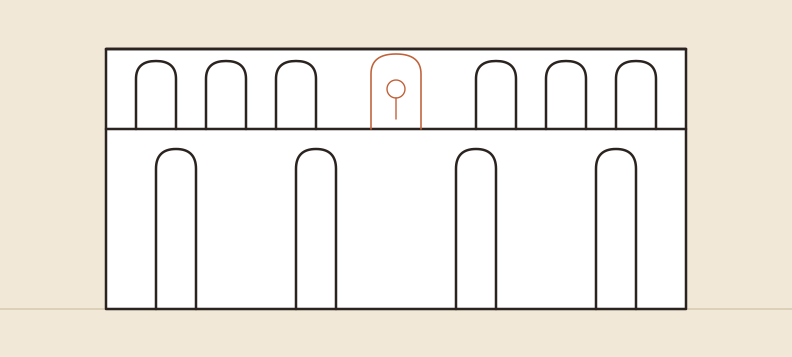
Eight statues in facade niches represent eight dynasties that ruled Naples, from Roger the Norman to Victor Emmanuel II. The royal apartments, the grand staircase and the court theatre are open with a paid ticket.
Teatro San Carlo
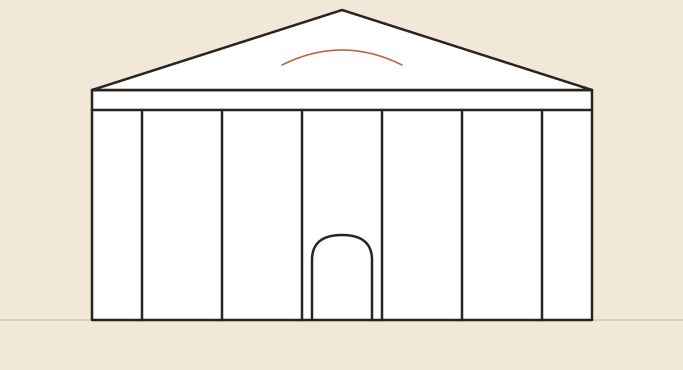
Inaugurated in 1737, nearly 40 years before Milan's La Scala: Europe's oldest continuously active opera house. The gilded interior and horseshoe-shaped hall can be seen on a guided tour or by attending a performance.

Galleria Umberto I
Built in 1890 as a symbol of post-unification Naples, with a glass-and-iron dome 57 metres high. Less touristy than its Milanese "big sister", but with the same mosaic floor worth photographing from above.
Castel Nuovo (Maschio Angioino)
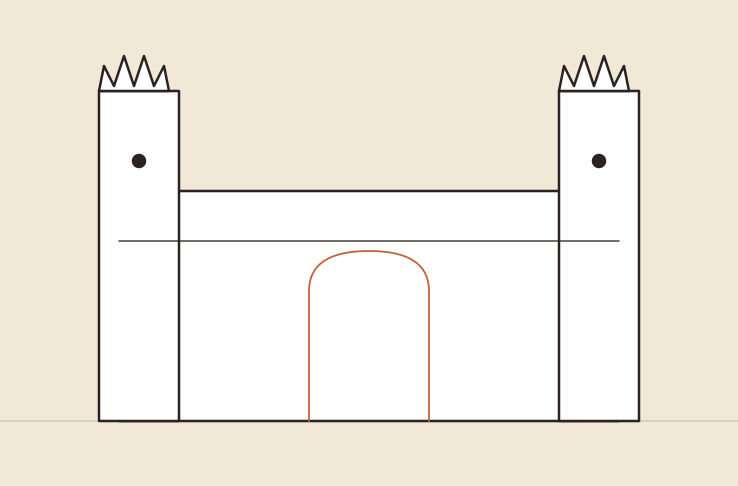
A 13th-century medieval fortress overlooking the port, with a white marble Triumphal Arch celebrating Alfonso of Aragon's entry into the city in 1443. The Civic Museum occupies its interior halls.
Via Toledo
Naples' shopping street, laid out in the 16th century: it connects Piazza del Plebiscito to Piazza Dante, crossing the Quartieri Spagnoli. One of the longest and liveliest pedestrian streets in Europe.
Want to skip the lines?
The Royal Palace and Teatro San Carlo can be booked ahead: the difference is most noticeable on spring weekends.
See tickets and experiencesMaggio dei Monumenti and Napoli Teatro Festival
In May, dozens of historic palaces normally closed to the public open their doors; in June the Napoli Teatro Festival brings performances to theatres and courtyards across the city.
See what's onExhibitions at the Royal Palace and Castel Nuovo
The exhibition programme changes seasonally, with temporary shows in the Royal Palace's historic apartments and in the halls of the Maschio Angioino.
See the current exhibitionReal Neapolitan pizza and a Spaccanapoli stroll
A proper pizza where the dish was born, or an evening walk along Spaccanapoli among nativity scene workshops, sfogliatelle and street life: two very different ways to feel the city.
See evening experiencesRun a business in Naples?
Pizzerias, restaurants, tour operators, craft workshops: if you'd like to be featured in this section or in "What to See", get in touch.
Spazio riservato agli operatori locali del territorio.